Material, Time, and Unpredictability In My Works
I. Introduction
In my work, I focus on the relationship between industrial materials like acrylic and resin, and how they interact with time and human control. The first piece uses carved acrylic filled with layers of coloured resin, exploring the balance between precision and chance. The second piece is a fluid painting where gravity and time mix colours into a chaotic state, showing how the process can change the final result. The third piece captures flowing epoxy resin on a tilted acrylic sheet, freezing movement into a solid form. Each piece explores a different aspect of materiality and process, they are also connected by a shared interest in redefining the boundaries of painting and sculpture.
My work questions boundaries between the sculpture and painting, Can rigid acrylic and liquid resin redefine painting and sculpture? How does the balance between controlling materials and letting them flow change their meaning? By comparing my process to artists like Lynda Benglis, I aim to show how materials can challenge and expand my understanding of art.
II. works

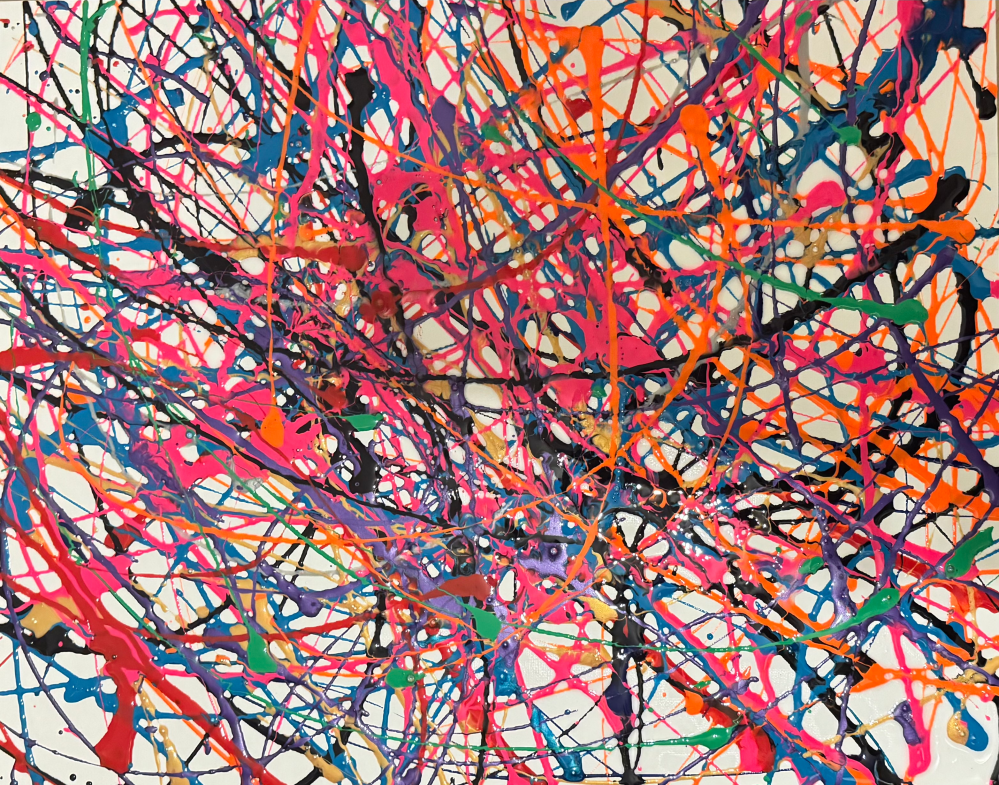
The Labyrinth
The first piece, The Labyrinth, is all about precision, depth, and how colours overlap. I used a router and a Dremel to carve lots of intricate grooves into a flat acrylic sheet over and over again, making a network of channels that look like a maze. Then, I filled these grooves with layers of coloured resin. With the repeated carving and the resin curing, each layer added overlapping lines of colour. This process was repetitive and took a lot of time, needing patience as each layer of resin had to dry before I could move on to the next.
The hard, smooth surface of acrylic and the use of industrial tools like routers and Dremels show control and industrial precision, while resin, which is fluid and unpredictable, represents organic movement and chance. The way these two materials interact reflects my interest in balancing structure and spontaneity. The final work is both a painting and a sculpture, mixing up the boundaries.
Order in Chaos
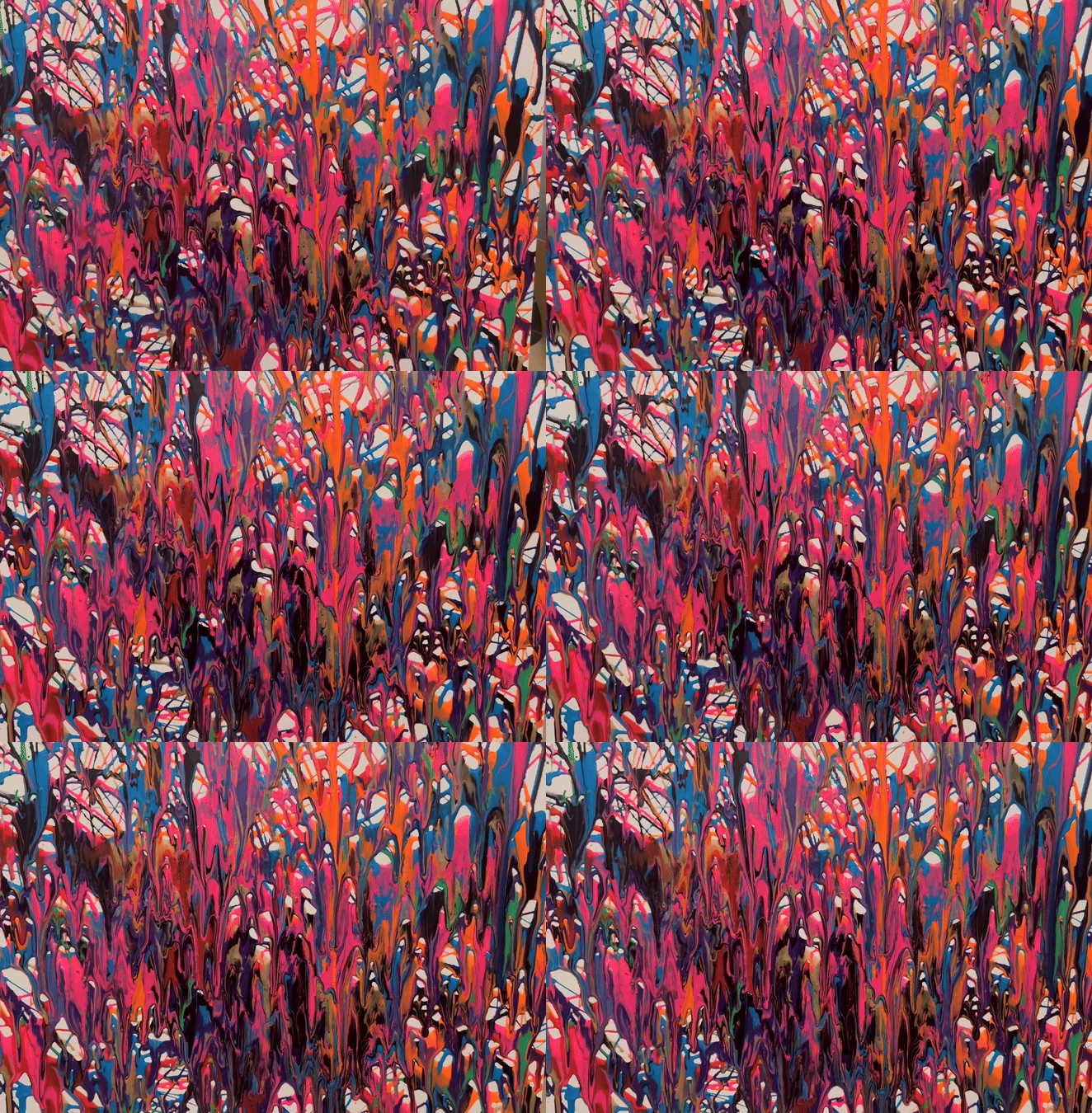
The second piece, Order in Chaos, is a fluid painting that looks at the relationship between control and unpredictability. Like the first piece, I wanted to start with overlapping lines, so I began by pouring paint onto a canvas board, making distinct, layered lines of different colours. But when I angle the board, gravity makes the colours start to mix and flow. Over time, the lines slowly turned into a chaotic blend of colours.
This process was both frustrating and enlightening. The control I had over the paint at first gradually went away, and the final result was something I couldn’t have predicted. This piece shows my like with how time flows and how change is inevitable. It also questions the traditional idea of the artist as someone who controls the result of the artwork, showing that sometimes the artist works together with materials and forces they can’t control. This has made me keep exploring and experimenting with uncertainty.

Tilted Time
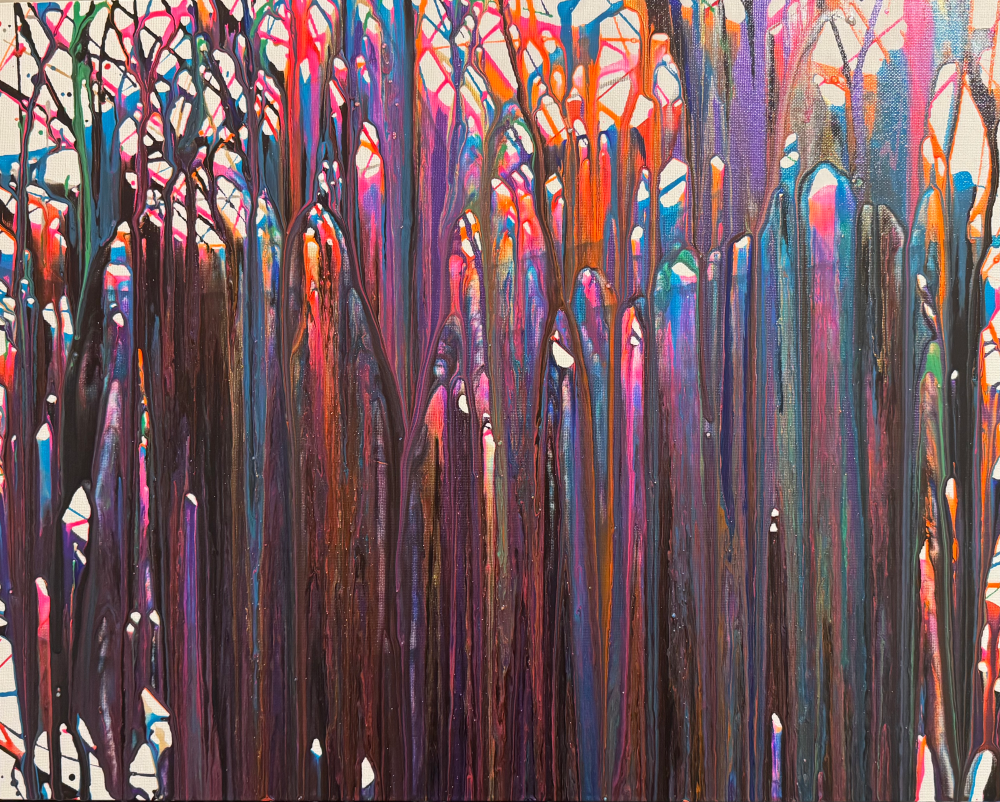
The third piece, Tilted Time, builds on the ideas from the first two works but goes in a new direction. I used epoxy resin on a tilted acrylic sheet, letting the resin flow freely. As the resin moved, it made dynamic patterns and textures, which were then frozen in place as the resin dried. This piece is about capturing movement and turning it into something static. The tilted surface makes the resin’s flow feel urgent and directed, and the drying process captures the time that happened before. This work makes viewers think about the relationship between the process and the final product.
III. Influences
My practice is inspired by many artists, Their use of colour, gravity, and materiality their way of challenging the traditional art forms have influenced my creative approach.
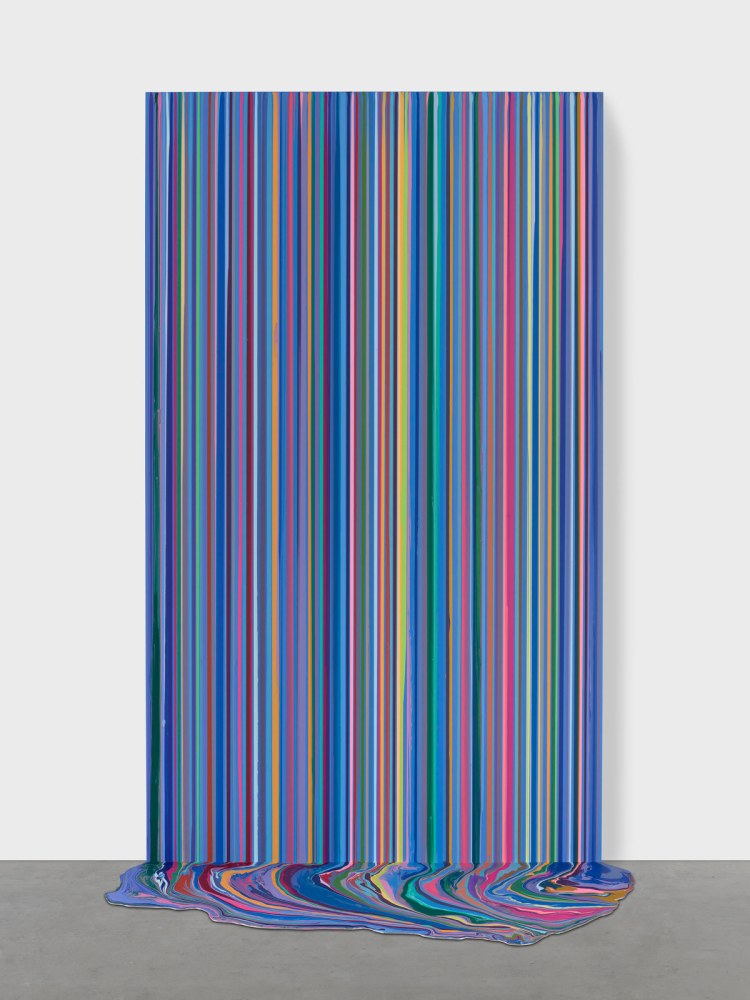
Blossom, 2023
acrylic on aluminum panels with additional floor section
235 x 159 x 67 cm
Ian Davenport’s “Blossom” shows symphonies between control and change, using gravity to guide the flow of paint. This has similarities with my experiments in “Order in Chaos” and “Tilted Time,” where I allowed gravity to dictate the final composition. However, while Davenport emphasizes communication between the precision and the free flow of the colours his use of colour has boundaries to separate each colour, my work embraces more of the unpredictability of fluid dynamics and changes, resulting in more organic and chaotic outcomes.
Frank Bowling’s painting “Ziff” introduced me to the expressive potential of colour and movement. Bowling’s technique of pouring paint onto tilted canvases creates the feeling of flow. His work inspired me to explore the interplay between colour and gravity, as seen in the blending and merging of hues in “Order in Chaos.” Yet, unlike Bowling’s large-scale, gestural abstractions, my work focuses on the process between initial control and eventual surrender to natural forces, highlighting the changes in artistic intention.
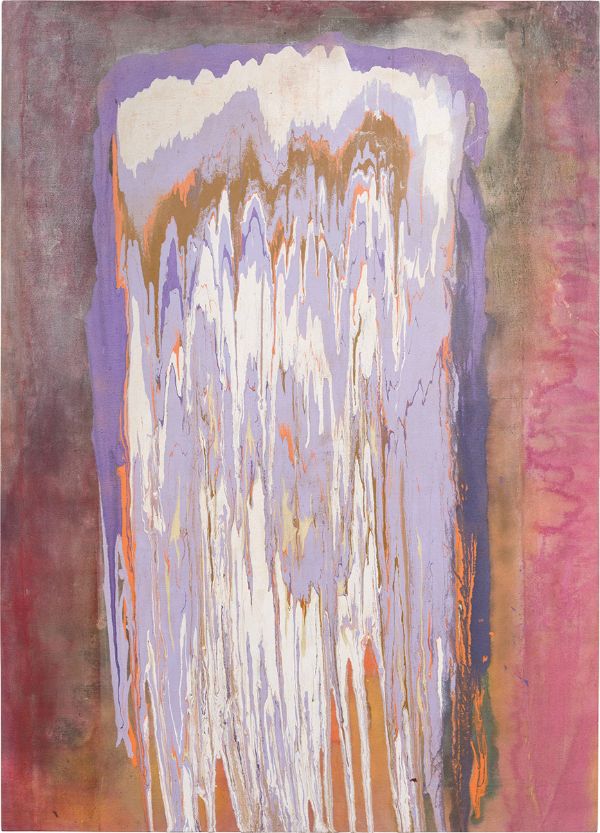
Ziff
1974
Acrylic paint on canvas
201 x 146 cm
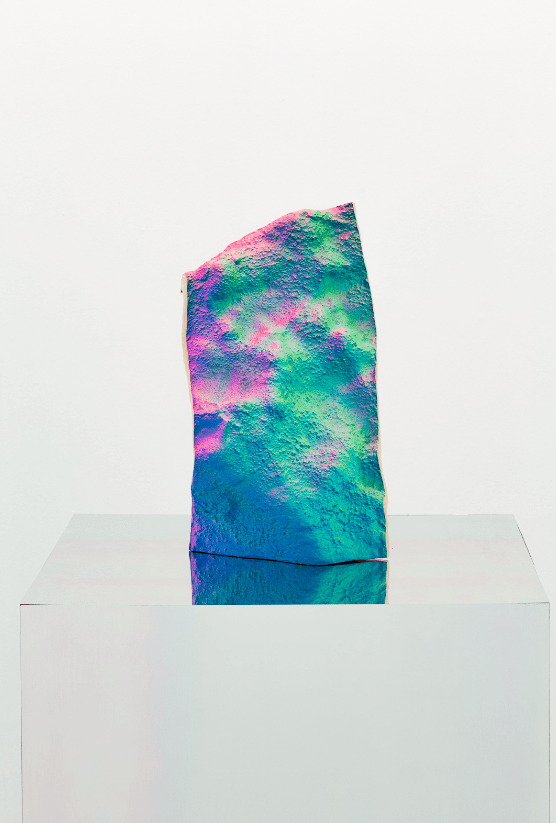
OBJ_914, 2022
Bronze and acrylic
38.8 × 19 × 17 cm
Michael Staniak’s use of digital and material hybrid in his work like “OBJ_914, 2022” also influenced my exploration of industrial materials and processes. His use of 3d scanners, CAD models and industrial materials like bronze and industrial tools to create intricate patterns and structures resonates, These sculptures replicate the textured surfaces of cave walls it also reminds me of the works I made before. In my work “The Labyrinth,” I carve intricate grooves into acrylic sheets, creating a network of channels that were filled with layers of coloured resin. This process, which required precise control, contrasts with the fluid and unpredictable nature of the resin, it’s responding to Staniak’s exploration of the relationship between digital precision, material spontaneity and nature words.
Lynda Benglis’s poured sculptural forms made from wax, latex, and metal have inspired my focus on the physicality and process of material-based practices. In her work “Eat Meat, 1969/1974” I like the way she used industrial material like bronze and poured it on the ground letting it flow freely. In “Tilted Time,” I used epoxy resin on a tilted acrylic sheet, allowing the resin to flow freely under the influence of gravity. This process, which captures movement and transforms it into a static form, reflects the characteristics of Benglis’s works.
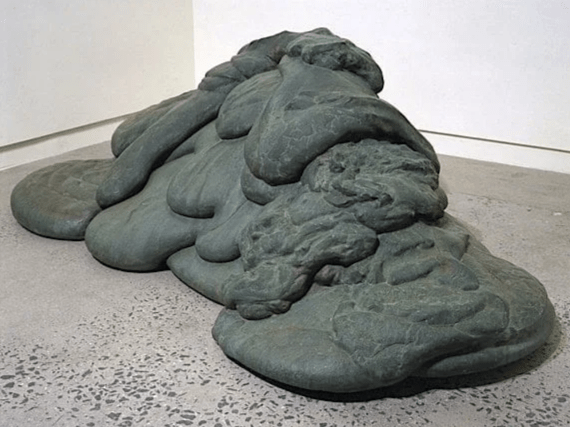
Eat Meat, 1969/1974
bronze
61 x 203.2 x 137.2 cm
These influences pushed me to develop more ways how to combine different meanings when I tried to push the boundaries of painting and sculpture.
IV. Possibilities
My work explores the interplay between control and unpredictable, it also made me think about the artist’s role in the artwork. In my works, initial control and eventual surrender to gravity reflect a dilemma Does the artist have absolute control over the outcome of the artwork? This way losing control intentionally or occurring without warning is both a strength and a limitation. It challenges the traditional understanding of authorship and invites viewers to consider the relationship between the artist and artworks. However, the use of unpredictable elements in the artwork can sometimes lead to results that viewers feel are arbitrary rather than intentional. This arbitrariness can make people think there is no intentional output of meaning of the artwork, as it may appear lacking in purpose or direction. However, it also opens up new possibilities for interpretation, or the arbitrariness is the purpose. The balance between intention and accident is delicate, and my work seeks to navigate this tension between them and accept both the frustration and the potential for discovery that it brings.
V. Boundaries and Materiality
In conclusion, my works want to redefine the boundaries of painting and sculpture by using the features and particularity of industrial materials like acrylic and resin. Through my works, I aim to create a symphony between precision and random, control and chance, and the tangible and the ephemeral. I hope to push the conversation about materiality and process further, exploring how materials and process can shape not only the form but also the meaning of my works. Ultimately, my work is an invitation to explore a solidification of time in my work, intentional or unpredictable mistakes in my work, and The relationship between controllable and uncontrollable in my work.
 Jimmy Zheng