Unit 1
I.
In Geraint Evans’s lecture, he talked about the complicated relationship between landscape painting and conflict, capitalism, and the legacy of imperialism. Geraint pointed out that landscapes aren’t just natural scenes—they carry much meaning about politics, history, economics, and culture. He mentioned how Anselm Kiefer uses the German forests in his work to mix myths, religion, and history to reflect on Germany’s past and culture. He also talked about how the Hudson River School painters captured the natural beauty of the U.S. to shape American culture and national identity, especially with Westward Expansion and “Manifest Destiny.”
All these works seem to have reasons or deeper ideas behind them, which made me wonder: Why do artists create such works? What drives them to create? Do they care about how people feel or what they do after seeing their art? This also made me think about my reasons for making art. I realized that artists have different motivations, but some are really driven by strong reasons. For example, Anselm Kiefer’s work is deeply connected to his experience growing up in post-war Germany. He uses his art to think about history and express his feelings. It’s not just about history—it’s also about his emotions.
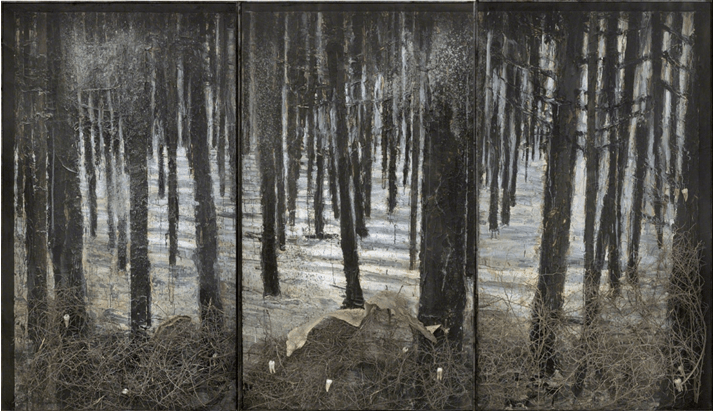
Winterwald, 2010
Artists’ motivations aren’t just about personal experiences and feelings. For example, the Hudson River School painters helped Americans understand their own culture and national identity by painting the country’s natural beauty. This kind of exploration helps artists connect with their cultural roots and helps viewers connect with their own cultural identity.
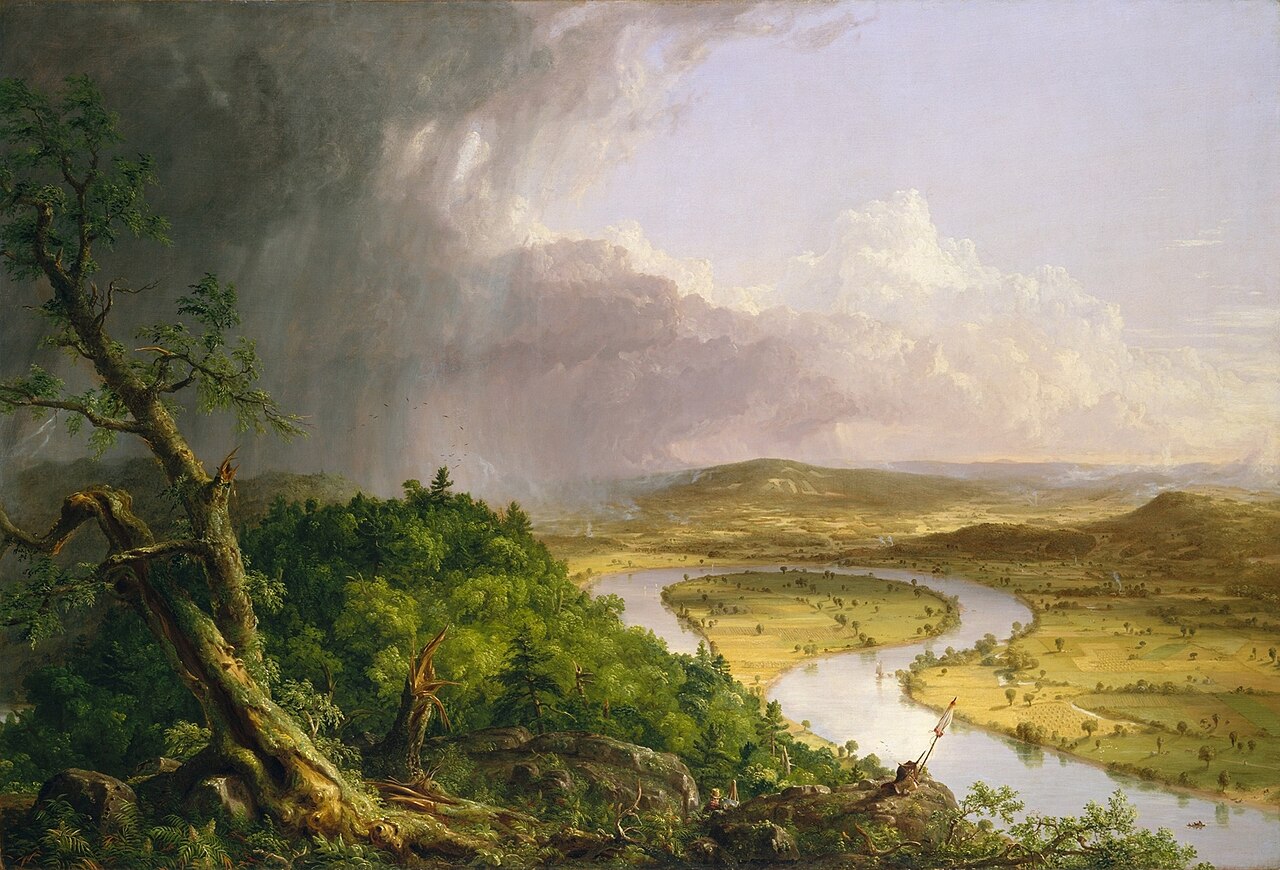
The Oxbow, View from Mount Holyoke, Northampton, Massachusetts, after a Thunderstorm, 1836
Many artists also use their work to talk about social issues like war, poverty, and environmental problems. They hope their art will make people think and maybe even bring about some change. For example, Paul Nash’s painting from World War I, “We Are Making a New World,” shows the ruins of war and expresses criticism of war and a longing for peace. This kind of art shows a sense of responsibility and mission.
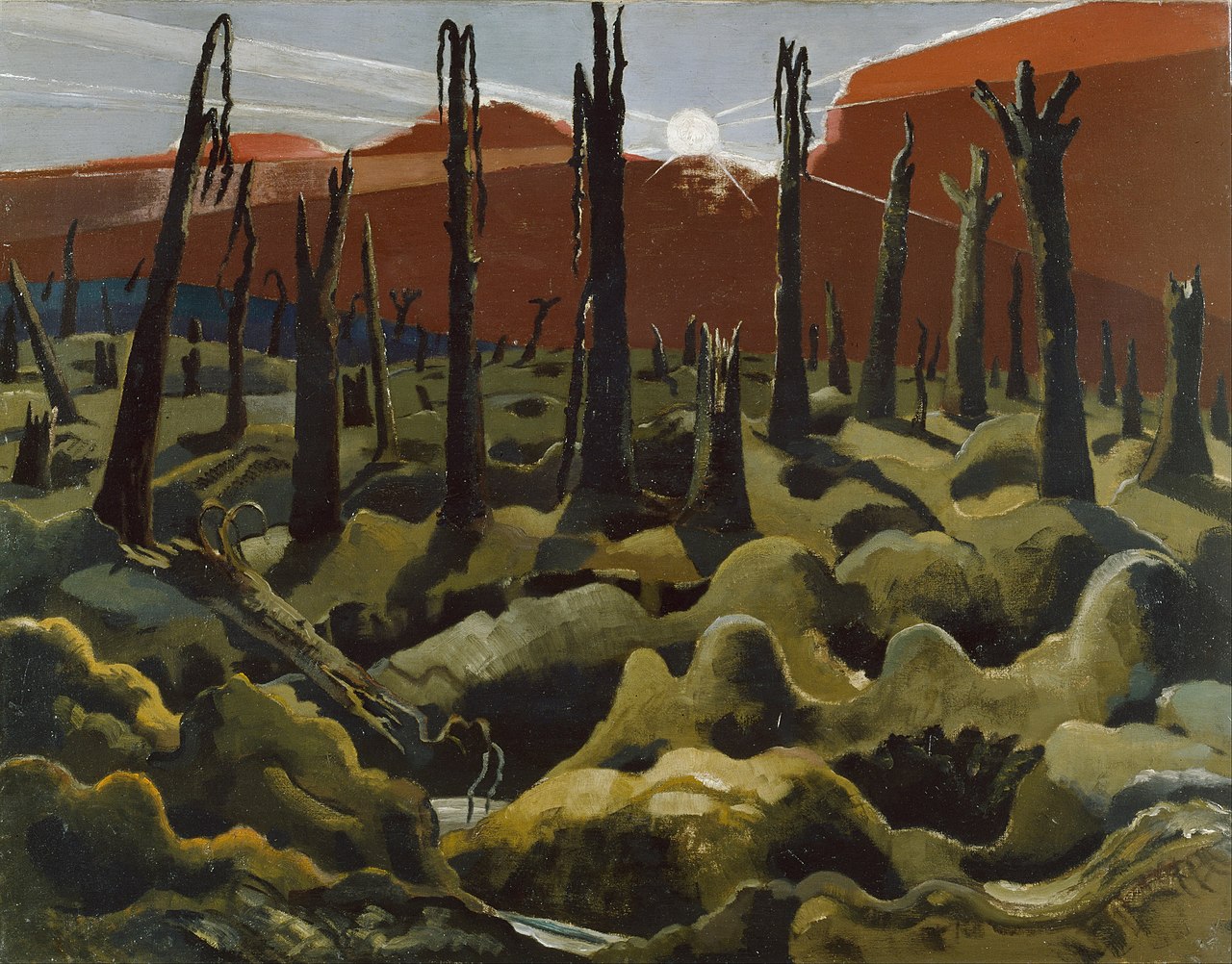
We Are Making a New World
II.
In Michael Arjeman’s lecture, he talked about the work of artist Paula Rego, which I think is another great example of artists showing a sense of social responsibility and mission in their work. Rego’s work is full of stories and deep metaphors, and she explores themes like power, gender, religion, and humanity.
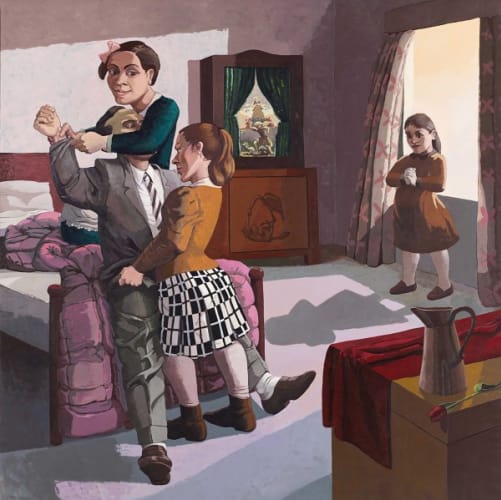
The Family, 1988
Her painting “The Family” is a good example. It shows a father being dressed by his daughters, which makes him look vulnerable and dependent. This flips the traditional family roles and makes you question the norms we usually don’t think about. When you look closely at the painting, it’s not clear if the daughters are dressing him up or taking his clothes off—both actions seem a bit invasive. This ambiguity seems intentional, making you wonder if the women are helping the father or hurting him. By flipping traditional family roles, Rego explores power and gender dynamics within the family. She cleverly uses this setup to make viewers think about the power structure in families. Also, background details like paintings of St. George and the Dragon and scenes from Aesop’s Fables add symbolic meaning, hinting at potential conflicts and moral questions. Overall, “The Family” not only shows Rego’s deep understanding of family relationships but also reflects her criticism of social norms and redefinition of gender roles. Her work seems to have a strong sense of mission, integrating social issues into art and giving viewers more to think about.
III.
During a lecture, Nelson Diplexcito spoke about the artist Frank Bowling. He mentioned that Bowling’s early works reflected the artist’s sensitivity to and sense of responsibility for social injustices. However, over time, Bowling gradually reduced his direct engagement with social issues, turning instead to a purer exploration of colour and form, which I found particularly fascinating.
For example, in the 1960s, Frank Bowling was immersed in a period of social upheaval, with the West Indies gaining independence and racial issues intensifying in the United States. His early work, Who’s Afraid of Barney Newman, is a prime example. In this piece, he incorporated the outlines of Guyana and South America. Guyana had just gained independence in 1966, and the artwork was created the following year, symbolizing Bowling’s celebration of his homeland’s independence and his reflections on the post-colonial era. The painting used red, yellow, and green—colours that not only appear on the Guyanese flag but also on the flags of many African nations. Through the use of maps and colours, Bowling expressed his identification with his homeland and explored the positioning of African diaspora culture in a global context from his unique perspective as an African-descended artist.
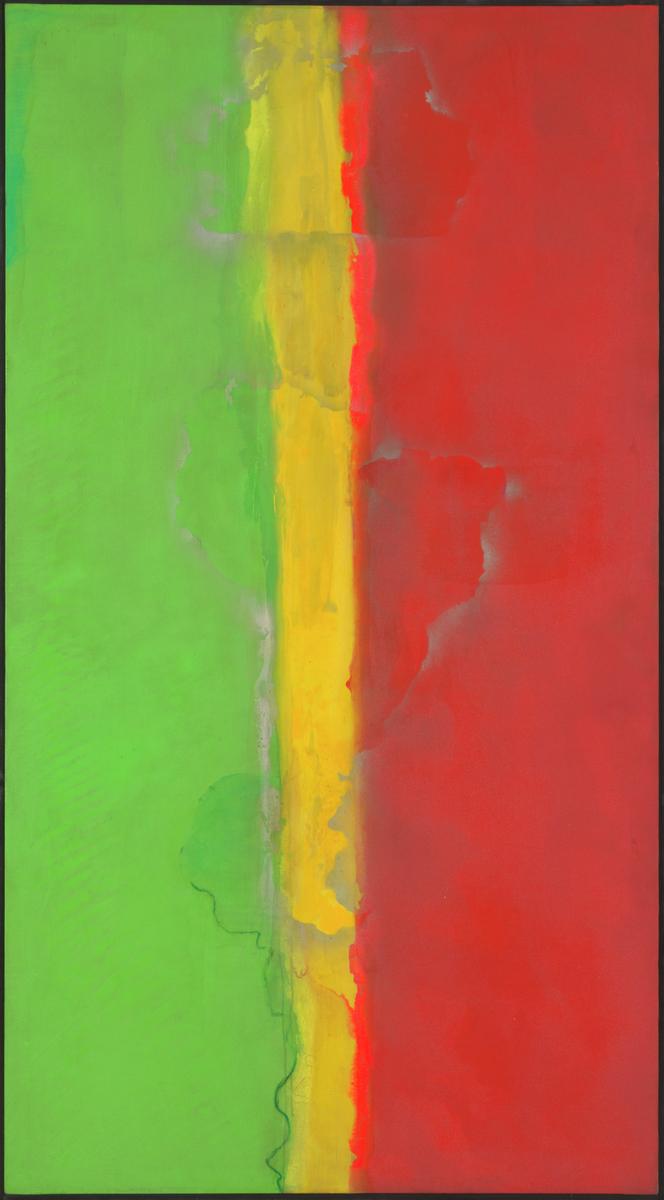
Who’s Afraid of Barney Newman, 1968
However, during the lecture, Nelson pointed out that starting in 1971, Bowling’s work transformed. All representational elements gradually disappeared, and he began to focus on the conception of colour and geometric forms, with a more improvisational approach to the creative process. Titles for his works were often determined later in the process, influenced by personal experiences and emotions. I believe that Rupununi, 1971 marks an important shift towards a more symbolic expression of colour, form, and material. Although this piece still belongs to his “map paintings” series, it reduced the concrete representation of maps, using colour instead to express his nostalgia for his hometown, the Rupununi region of Guyana, and his memories of childhood.
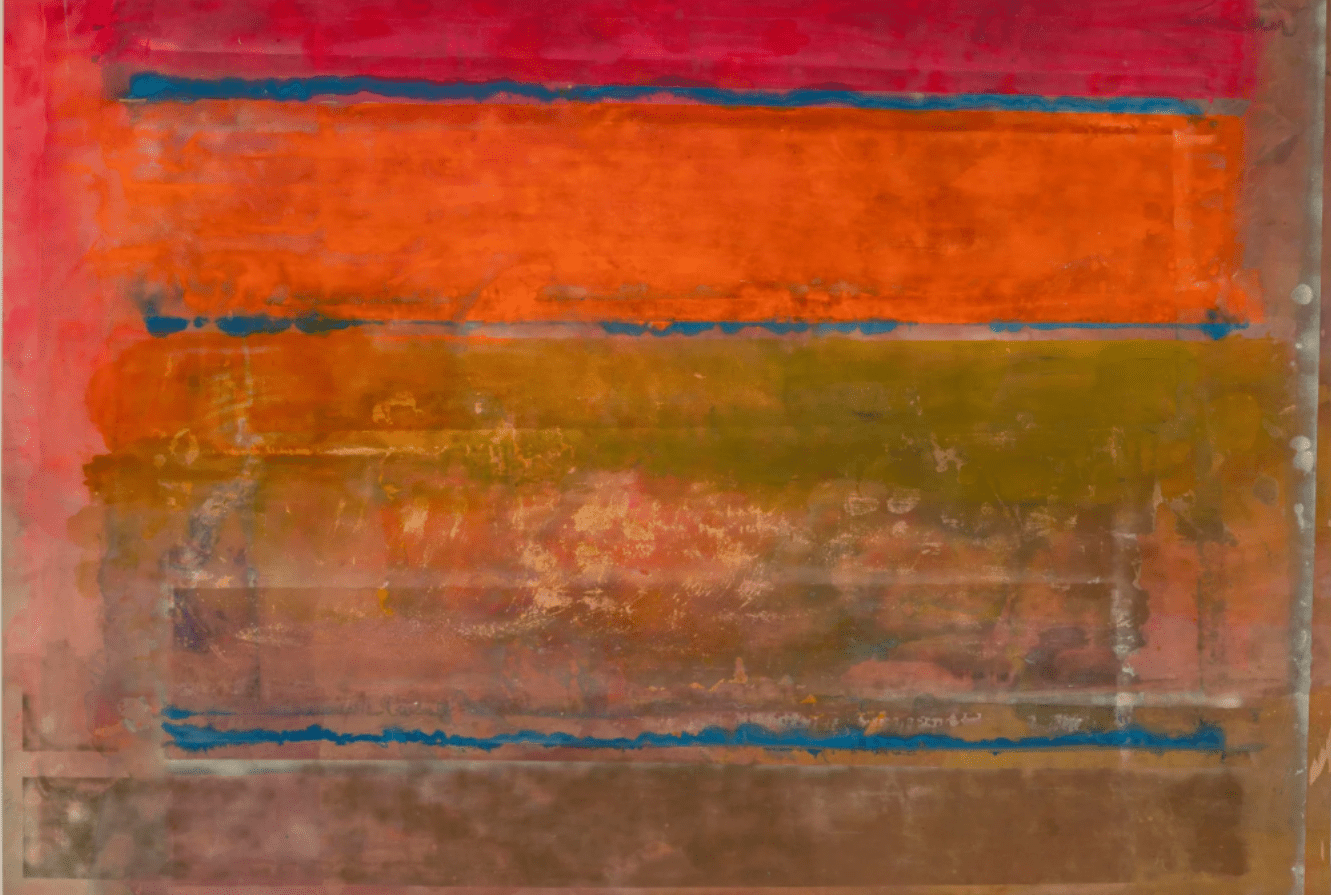
Rupununi, 1971
In his later works, Bowling became even more purely focused on the use of mixed media, the integration of colour and form, and the continuation of abstract expressionism. For example, in his piece Kill Clay, 2013, Bowling employed a rich palette, creating a dynamic visual effect through the flow and accumulation of paint. This integration of colour and form not only enhanced the visual impact of the artwork but also endowed it with an abstract narrative quality. This piece reflects Bowling’s transition from representational and semi-representational styles to complete abstraction. His works retained the materiality of painting while conveying deeper emotions and ideas through abstract forms.

Kill Clay, 2013
As Bowling once wrote in Arts Magazine, responding to the heated discussions about “Black art” at the time, he believed that Black art does exist. People of colour should create art and excel in it, but Black artists are part of modernism, not separate from the modern art movement. Therefore, artists should not be burdened with a so-called “mission” but should remain true to their creative motivations.
 Jimmy Zheng